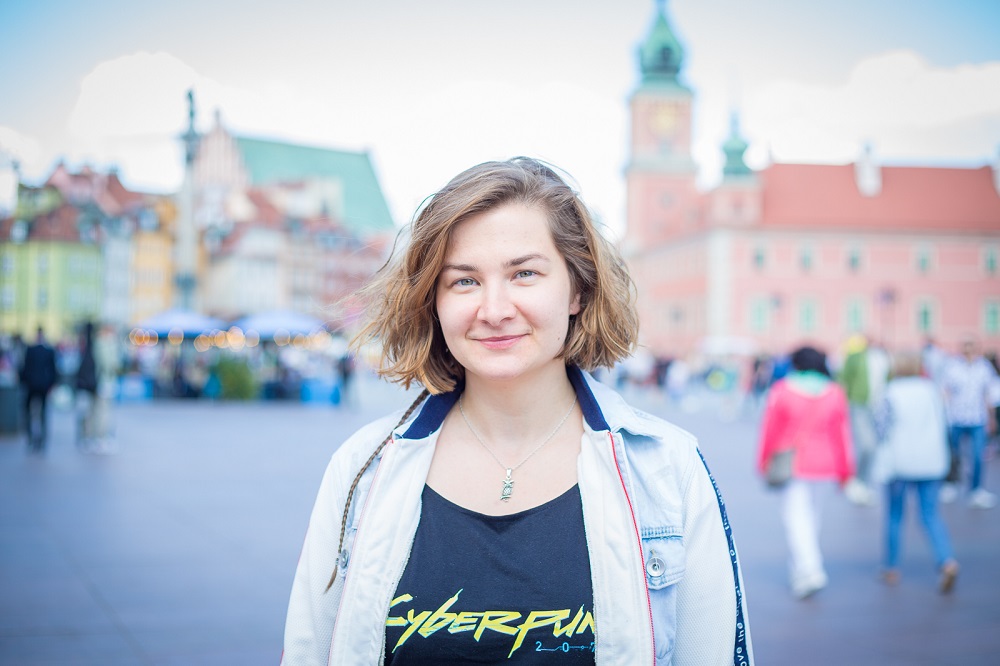
Photo by Ola Sierant
Castle Square, Warsaw
Dr Anna Dawid
Quantum physics & machine learning scientist,
theatre and games enthusiast.
Hi! I’m an assistant professor at the Leiden Institute of Advanced Computer Science (LIACS) and the Leiden Institute of Physics (LION) at Leiden University in the Netherlands, and a principal investigator in the aQa group. I am happily playing with interpretable machine learning for science, ultracold platforms for quantum simulations, and the theory of machine learning. My scientific passion is molding automated approaches into a unique new scientific lens and looking through it at established, difficult quantum problems.
Before joining aQa, I was a research fellow at the Center of Computational Quantum Physics of the Flatiron Institute in New York. In 2022, I defended my joint Ph.D. in physics and photonics under the supervision of Prof. Michał Tomza (Faculty of Physics, University of Warsaw, Poland) and Prof. Maciej Lewenstein (ICFO – The Institute of Photonic Sciences, Spain). Before that, I did my MSc in quantum chemistry and BSc in biotechnology at the University of Warsaw.
I am a QDNL Top Talent awardee, a 2022 FNP START laureate, and a selected participant in both the 2024 Lindau Nobel Laureate Meeting and the 2026 Heidelberg Laureate Forum. If you want to know more about me, read my answers to “10 Questions” for the Women in Research Blog or listen to the Computers Don’t Byte episode, where I was a guest!


Research directions

Understanding machine learning
Why overparametrized models generalize so well? Is generalization related to the flatness of the training loss minimum? What is the reason for double descent? What data features are learned by machines?
Machine learning for sciences
How to boost quantum experiments with deep learning? How to automatically detect local and global order parameters of quantum phase transitions? Can we learn new physics from trained neural networks?
Ultracold molecules
What happens when we have both magnetic and electric excitations which are additionally coupled? Can we go beyond diatomic molecules with diagonal Franck-Condon factors with laser cooling?
Quantum simulations
What novel phases of matter can we design? How to understand high-temperature superconductivity with quantum simulators?
Featured publications
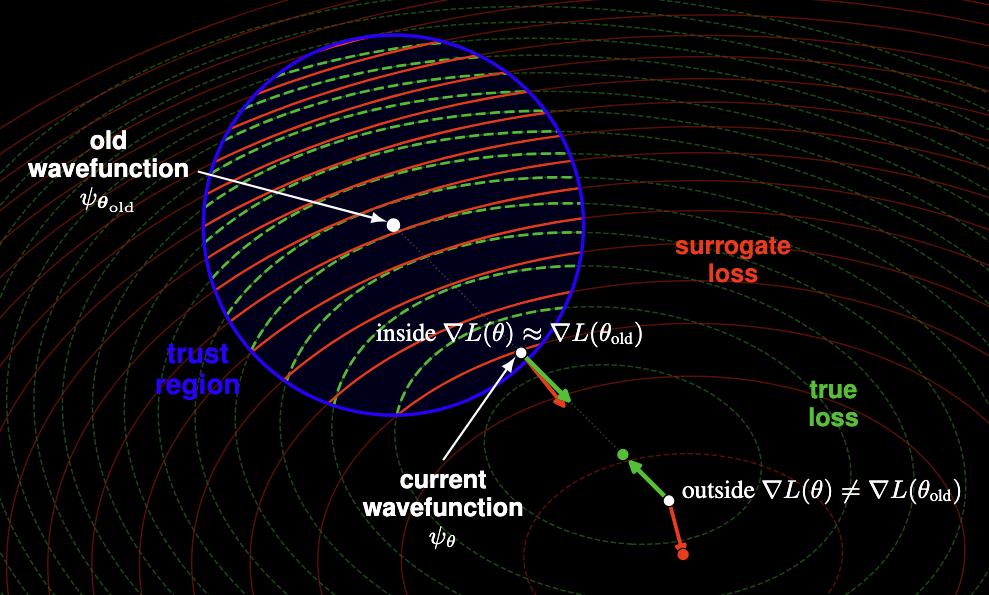
J. A. Duque, S. G. Heredia, V. Hernandes, E. Greplová, T. Spriggs, A. Courville, A. Dawid. One More Time: Revisiting Neural Quantum States from a Reinforcement Learning Perspective. arXiv:2607.02292.
See the summary on LinkedIn!
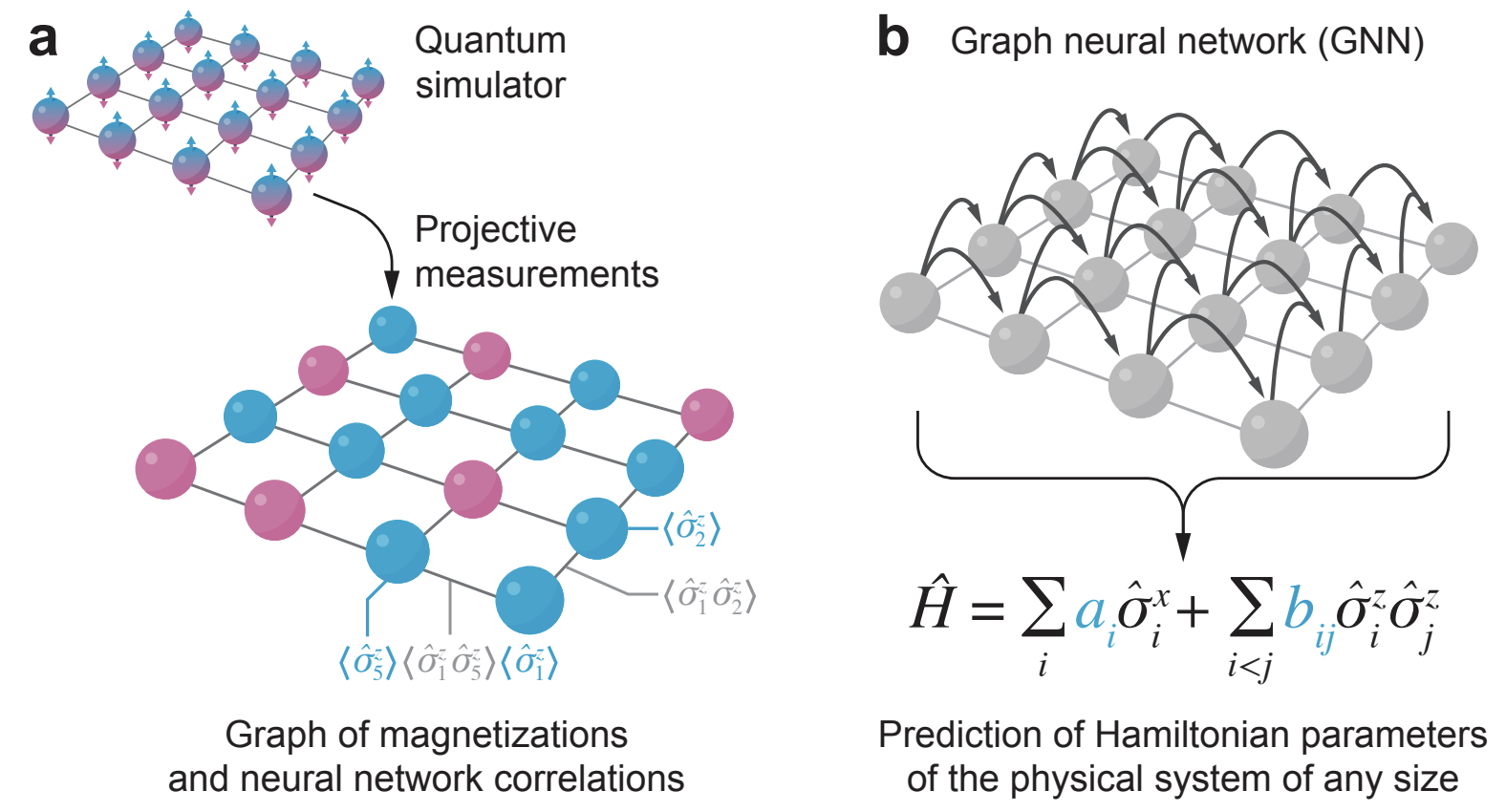
O. Simard*, A. Dawid*, J. Tindall, M. Ferrero, A. M. Sengupta, A. Georges. Learning interactions between Rydberg atoms. PRX Quantum 6, 030324 (2025).
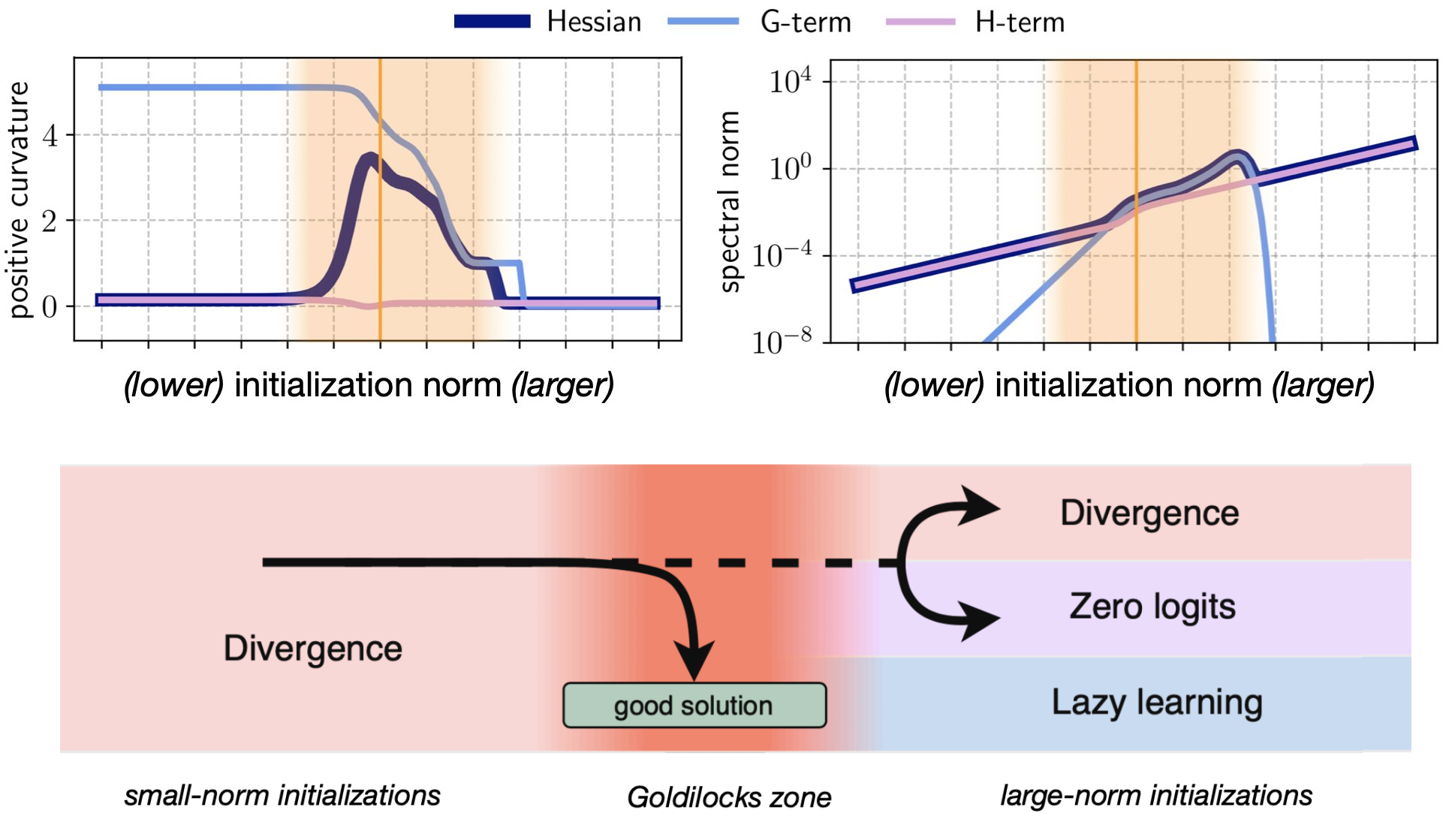
A. Vysogorets, A. Dawid, J. Kempe. Deconstructing the Goldilocks zone of neural network initialization. ICML ’24, arXiv:2402.03579.
See the summary on X!
News
Jul 02, 2026
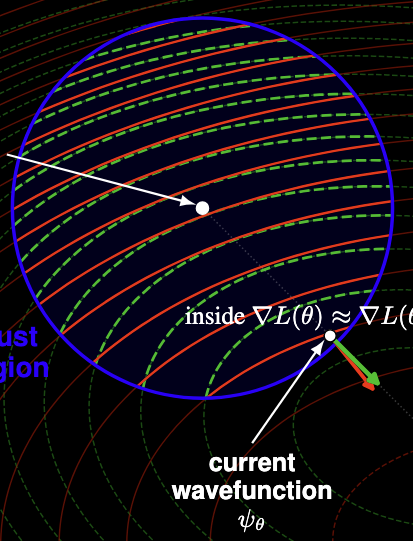
The first paper of our research group has just landed on arXiv! And it’s exactly kind of science I love doing – you bring experts from different fields, and magic happens 🙂 we propose Proximal Wavefunction Optimization (PWO) and show that for autoregressive NQS it strikes the sweet balance of being principled like SR but fast like Adam. And it scales beautifully. Maybe we can now see if the bitter lesson holds for NQS? See the summary on LinkedIn for more 🙂
Jun 01, 2026
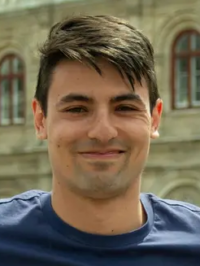
Juan Agustin Duque has been visiting us since February, and he has now become the first postdoc in the group! He brought unique expertise in RL, which has already resulted in a super cool paper on the RL-NQS connection and resulting new optimizer (stay tuned for the arXiv soon!), as well as knowledge of game theory, evolution strategies, and how to start a successful start-up. We’re extremely happy to have him on board! 🙂
Jan 01, 2026
I have just become Quantum Delta NL’s newest Top Talent, an award that accelerates the careers of exceptional early-stage quantum professionals in the Netherlands. I feel very proud, accelerated, and quantum-professional already 😀
Nov 15, 2025
I’m very happy to report that (1) our proposal on Understanding the trainability limits of classical neural-network representations of quantum states was awarded within the Quantum Limits Summit Grant (NWO), and even more importantly, (2) our group was joined by a new PhD student, Sergio García Heredia, who is now delving into neural quantum states 🙂 BTW, check out Sergio’s fantastic personal blog, also for tutorial on NQS!